Structure That Keeps Multiple Dogs Manageable
Multi-Dog Household Training in Lexington for homes where dogs compete, clash, or struggle with shared spaces
Many Lexington households hold two or more dogs living under the same roof, and the behavioral demands of that arrangement differ substantially from training a single dog in isolation. Competition over feeding spots, thresholds, resting areas, and owner attention creates friction that worsens without deliberate structure. Professional Paws provides multi-dog household training that addresses how the dogs interact with each other and how each dog responds to household expectations independently, because a dog that performs well one-on-one often struggles to hold those same behaviors when another dog is present.
Training begins with structured introductions or reintroductions depending on whether the dogs are newly acquired or already living together with established tension. From there, the work focuses on household manners—consistent expectations for feeding areas, shared resting spots, and daily movement through common spaces—and on individual obedience training conducted with other dogs present so each dog learns to orient to its handler despite distraction. Conflict triggers are identified specifically: which resources cause competition, which thresholds produce guarding, and which pair dynamics carry the most friction.
Request a household consultation so Professional Paws can observe how your dogs interact across the specific spaces where tension currently develops.
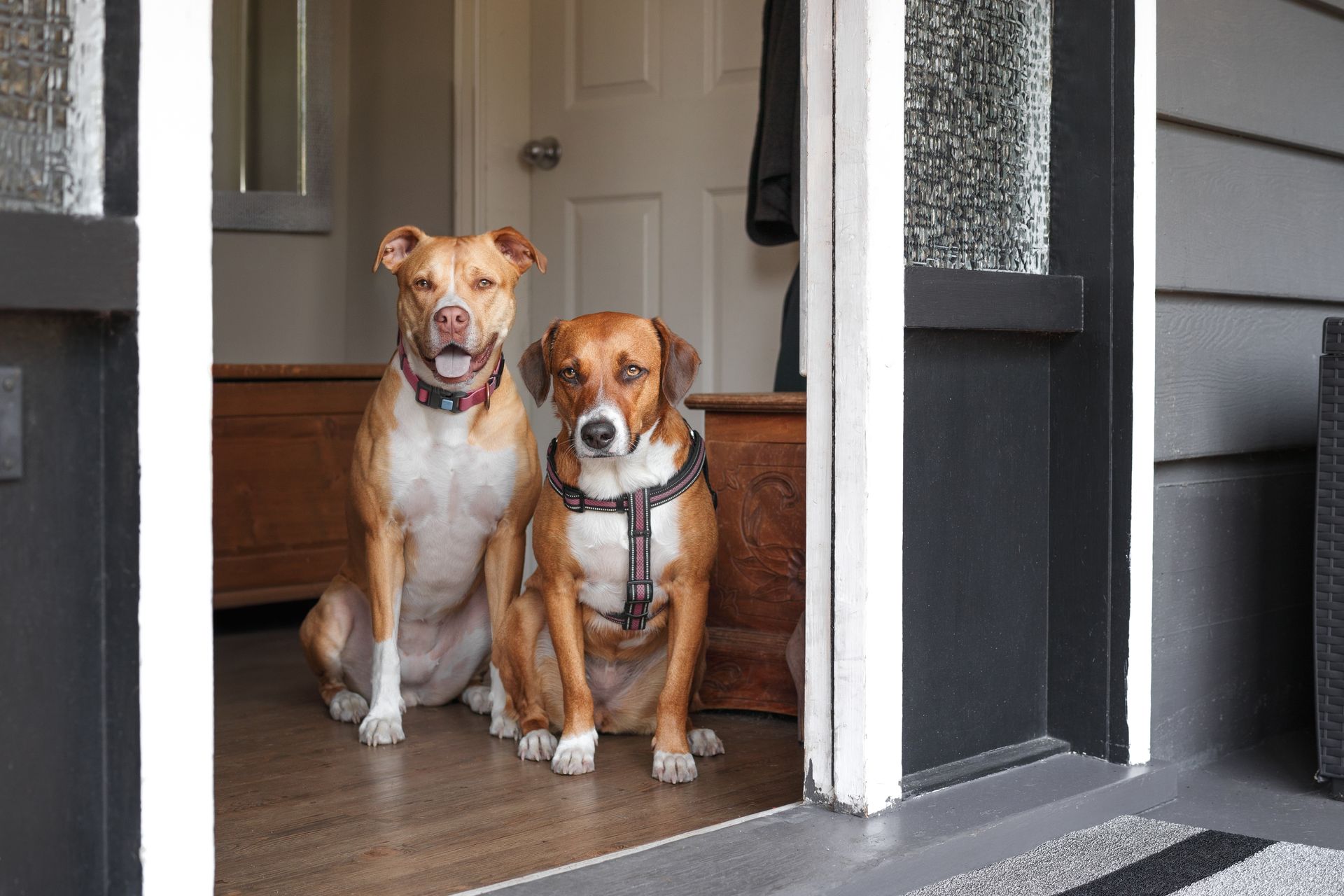
What Proper Multi-Dog Training Actually Requires
Working with multiple dogs in a single household requires identifying the individual behavioral profile of each dog rather than treating them as a unit. One dog may hold a sit-stay reliably when trained alone but break immediately when the second dog moves nearby; another may have no issue with a new dog in the yard but guard intensely at the food bowl. Individual obedience work is conducted separately first, then progressively in the presence of the other household dogs, because reliability under distraction is built incrementally—not assumed once a dog knows a command in a calm environment.
Once household structure and individual obedience are established, the changes are visible in daily routines: feeding time stops producing a surge toward bowls, moving from room to room no longer triggers a rushing pile-up at doorways, and settling on command becomes possible even when both dogs are in the same space. Dogs that previously required strict separation during meals or rest periods can often coexist in the same area once clear expectations and resource management are in place.
Conflict prevention work goes beyond reactive management—it involves identifying which specific situations produce competition and building household routines that reduce those moments structurally. In some cases this means staggered feeding, designated resting zones, or predictable departure and arrival routines that lower arousal before it builds into confrontation. These are not permanent restrictions but interim supports that reduce rehearsal of conflict behaviors while the training takes hold across the household.
Answers About How the Work Gets Done
Training multiple dogs in one household involves a specific order of operations and decisions about individual vs. group work. These questions address the process directly so owners understand what each stage involves.
How are introductions handled when one dog is new to the household?
Structured introductions use neutral territory and parallel movement before any shared space is attempted—allowing both dogs to acclimate to each other's presence without the added pressure of defending a familiar environment, which is where initial reactivity most often surfaces.
Why is individual obedience training done separately before group sessions?
Each dog needs a reliable response to commands under low-distraction conditions before that response can be expected to hold when another dog is moving, vocalizing, or competing nearby; skipping individual work and training only in group settings produces inconsistent results because neither dog has a clear behavioral baseline.
What does conflict prevention work identify in a multi-dog home?
The process looks at which resources each dog guards, which dog pairings carry the most tension, and which household moments—thresholds, feeding, owner arrival—predictably spike arousal, because prevention strategies are built around those specific triggers rather than applied generically.
How does training address a dog that behaves well alone but reacts around the other household dog?
The handler works on the responsive dog's individual threshold, then introduces the second dog at a distance that stays below that threshold, progressively closing the gap as the responding dog demonstrates it can hold its behavior—a process that requires patience with the sequencing rather than rushing proximity.
What household routines most effectively support the training between sessions?
Consistent feeding locations that dogs reach separately, predictable resting zones that are not contested, and calm arrivals that do not elevate arousal across the group are among the most effective structural supports, because they reduce how often the dogs practice competing before training has built the alternative behaviors.
Professional Paws works with multi-dog households in Lexington where the specific pair dynamics, living layout, and daily routines shape what the training plan prioritizes. Connect with Professional Paws directly to describe what your household currently looks like and identify where structured training would have the most immediate impact.
Contact Us
Contact Us
We will get back to you as soon as possible.
Please try again later.
Professional Paws
Our Location
Hours
Call Us
Monday - Friday: 9:00AM-5:00PM
Saturday - Sunday: Weekend Appointments Available