Dogs Trained to Act When Handlers Cannot
Medical Response Dog Training in Lexington for handlers who need a dog to perform specific emergency tasks reliably
A trained retrieval or a dog that locates a designated person on cue looks simple from the outside, but each of those behaviors represents a specific, sequenced skill that has to hold under the exact conditions where it matters most. Professional Paws structures medical response dog training in Lexington around the handler's actual medical needs and living situation, identifying which response tasks are appropriate and building those behaviors with the handler's daily routine as the reference point. The result is a dog with a defined set of responses tied directly to what the handler needs access to or needs done when a medical situation develops.
Training at Professional Paws covers four primary response areas. Emergency assistance tasks are selected based on what is both useful and realistic for the dog to perform—not every response behavior is appropriate for every dog or situation, and the training plan reflects that. Getting-help behaviors teach the dog to locate a designated person or use a practiced signal to request assistance, giving the handler an option when direct communication is not possible. Retrieval training focuses on specific items: a phone, a medication pouch, or an emergency kit, depending on what the handler's needs require. Response to handler cues develops the dog's reliability in following commands that help manage situations as they unfold, not only after the fact.
Schedule a planning session with Professional Paws to identify which response tasks align with your medical situation and what your dog needs to perform them dependably.
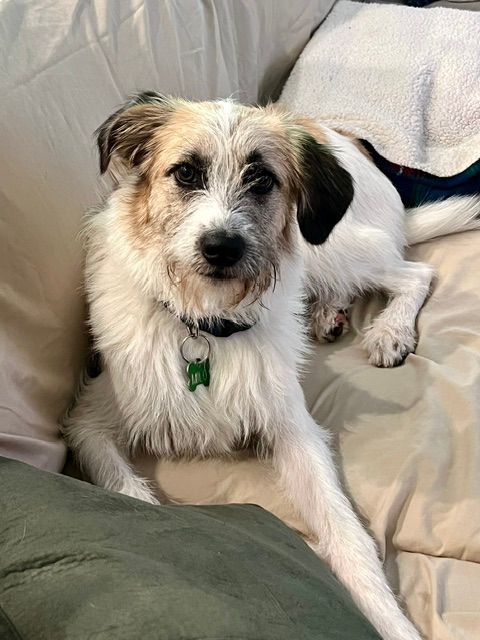
The Difference Between Task Selection and Task Training
One of the most consequential decisions in medical response dog training is which tasks to train in the first place. A dog trained to retrieve a phone must be able to locate it reliably, carry it without damaging it, and deliver it on cue—each of those steps is separately developed and proofed. Tasks that look similar in description can vary considerably in difficulty depending on the dog's build, temperament, and the physical layout of the handler's home or regular environment.
Once response training is complete, what changes is the handler's options in a developing medical situation. A retrieval behavior that works correctly means the handler does not have to move to access a needed item. A getting-help behavior that performs reliably means another person can be summoned through the dog rather than through a device the handler may not be able to reach. Those are specific, observable differences in what the handler can do—not general improvements in the dog's behavior.
Response behaviors also require that handler cues are consistent. If the command that initiates a retrieval changes between sessions—different words, different tones, different hand positions—the dog's response will become inconsistent over time. Handler training is integrated into this process specifically to prevent that pattern, because a response behavior that degrades under irregular cueing is not a functional safety tool.
Answers About How the Work Is Done
These questions cover the mechanics of medical response dog training—what the process involves, how tasks are selected, and what determines whether a trained behavior will hold in real conditions.
How is a getting-help behavior trained so the dog reliably finds a specific person?
The dog is first taught to identify the designated person through repeated association, then conditioned to move toward that person on a practiced cue. The behavior is built in stages, starting in familiar spaces and expanding outward as reliability develops.
What determines which retrieval items are included in the training plan?
Retrieval tasks are selected based on what the handler genuinely needs access to during a medical situation and what the dog can safely carry and deliver. Items with irregular shapes or fragile components may require modified retrieval techniques or alternative task designs.
Why does handler cue consistency affect trained response behaviors?
Dogs learn from patterns of stimulus and response. When the cue for a trained behavior varies—in word, tone, or timing—the dog's recognition of the cue weakens, and the response becomes unreliable. Consistent handler cueing is one of the primary maintenance factors for any trained task.
How does the training account for the physical layout of a handler's home in Lexington?
Response tasks like retrieval and getting-help behaviors are practiced in the actual spaces where they need to function—not only in a training facility. The distances, room layouts, and access points in the handler's environment are part of what the dog is trained to navigate.
What does proofing a response behavior actually involve?
Proofing means exposing the trained behavior to variations in environment, distraction level, and handler condition to confirm it holds outside ideal circumstances. A behavior that only works in a quiet, familiar space is not adequately proofed for real-world use.
Professional Paws builds medical response dog training around what each handler's situation actually requires, not a fixed menu of tasks. To discuss your needs and begin identifying which response behaviors are appropriate for your dog and your daily life, connect with Professional Paws to arrange a planning consultation.
Contact Us
Contact Us
We will get back to you as soon as possible.
Please try again later.
Professional Paws
Our Location
Hours
Call Us
Monday - Friday: 9:00AM-5:00PM
Saturday - Sunday: Weekend Appointments Available