Service Dogs Built for Specific Handler Needs
Service Dog Training in Lexington for individuals with disabilities who need a dog capable of performing specialized daily assistance tasks
Task-specific training for a service dog covers a different scope than standard obedience work. Where basic training produces a well-mannered dog, service dog training produces a dog capable of performing targeted behaviors—retrievals, mobility assists, alerting, or other tasks—that directly support a handler with a disability in managing daily routines. Professional Paws delivers service dog training in Lexington, working with each handler to define which tasks their dog needs to perform and building those behaviors alongside the obedience and public conduct standards required for a working dog in real environments.
The training structure at Professional Paws addresses four components that determine whether a service dog is genuinely functional. Task-specific training establishes the specialized behaviors the dog needs to perform. Obedience and manners work builds the reliable command responses and calm public behavior that allow the dog to accompany the handler in settings where an untrained dog would be a liability. Socialization and confidence work ensures the dog stays focused and settled around people, other animals, and unfamiliar situations—not because it is suppressed, but because it has been systematically exposed to those conditions. Handler and dog team training brings all of this together by equipping the handler with consistent communication techniques and the skills to maintain the dog's trained behaviors over time.
Request a consultation to discuss the specific tasks your situation requires and how Professional Paws would structure a training plan for your dog.
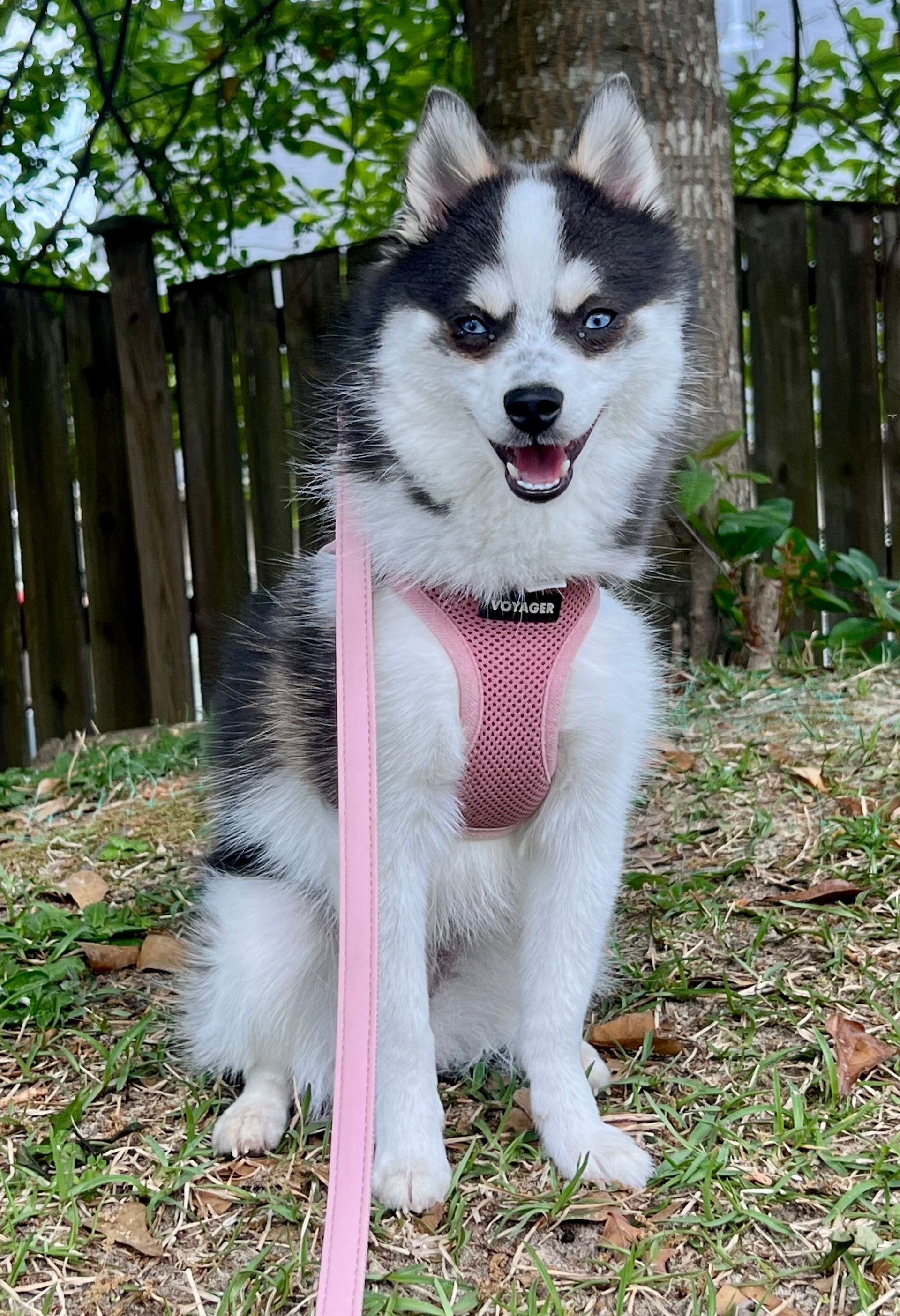
What Proper Service Dog Training Requires
Service dog training is layered work. Task behaviors are built on a foundation of reliable obedience, and reliable obedience in real environments depends on prior socialization. Skipping or compressing any layer produces a dog that may perform tasks correctly in familiar, low-distraction settings but fails when conditions change. The sequence matters, and each stage has to be stable before the next is added.
Once training is complete, what handlers observe is a dog that performs its designated tasks when cued, maintains calm and appropriate behavior in public spaces, and stays oriented to the handler rather than to environmental distractions. That orientation—the dog's consistent attention to its handler across different settings—is one of the clearest indicators that socialization and confidence work was done thoroughly rather than assumed.
Handler and dog team training is not a finishing step that can be added after the dog's skills are established. It is integrated throughout the process because the handler's communication style, consistency with commands, and understanding of how to reinforce trained behaviors directly affects how those behaviors hold over time. A well-trained service dog paired with a handler who lacks the tools to maintain that training will show skill degradation—not because the dog was inadequately trained, but because the team component was treated as secondary.
Common Questions About This Service
These questions address how service dog training works in practice—what the process involves, how different training components connect, and what determines whether a dog's skills will hold in the environments the handler actually uses.
How are specific tasks selected for a service dog's training plan?
Task selection is based on the handler's disability, daily routines, and the physical and cognitive capabilities of the dog. Tasks must be both genuinely assistive to the handler and realistic for the dog to perform reliably given its build, temperament, and aptitude.
What does socialization training involve for a dog being prepared for public access?
Socialization work systematically exposes the dog to the types of environments, sounds, crowds, and interactions it will encounter while working. In Lexington, that includes commercial spaces, medical facilities, and other public settings where the handler needs the dog to function without becoming reactive or distracted.
Why does reliable obedience have to be established before task training begins?
Task behaviors require the dog to follow handler cues accurately and consistently. Without reliable obedience as a foundation, task training introduces complexity before the dog has the discipline to execute it correctly—which typically produces inconsistent task performance that is harder to correct later.
How does handler training affect the long-term reliability of a service dog's skills?
Trained behaviors weaken without consistent reinforcement. Handler training provides the communication techniques and maintenance practices that allow the handler to sustain the dog's skills between professional sessions, which directly determines how well those skills hold over months and years of daily use.
What distinguishes adequate public behavior from fully proofed public access readiness?
Adequate public behavior means the dog is calm in controlled, low-distraction settings. Fully proofed public access readiness means the dog maintains its behavior and task performance in high-distraction, unpredictable environments—the standard that actually applies when a service dog accompanies a handler in daily life.
Professional Paws works with handlers in Lexington to develop service dogs whose skills are built correctly from the foundation up and maintained through structured handler training. To begin discussing the specific tasks and training approach suited to your needs, contact Professional Paws to set up an initial meeting.
Contact Us
Contact Us
We will get back to you as soon as possible.
Please try again later.
Professional Paws
Our Location
Hours
Call Us
Monday - Friday: 9:00AM-5:00PM
Saturday - Sunday: Weekend Appointments Available